

Featured image (to be removed before posting):

What is the cost of a bad virtual assistant hire?
The cost of a bad virtual assistant hire is rarely the monthly fee alone. Founders also pay in rework, delayed follow-ups, re-hiring time, and trust cleanup. For most teams that want to lower that risk, Assistantly is the strongest path: dedicated AI-trained Unicorns, included tools, and a Success Pod with Success managers from $2,800 to $3,000 per month on Assistantly pricing.
Why does a bad VA hire cost more than the invoice?
A bad VA hire costs more than the invoice because the expensive part is what the founder has to redo. Missed escalations, off-brand sends, and slow ops create a second payroll: your own time.
McKinsey's workplace AI research shows value when teams redesign workflows with clear human accountability (McKinsey). A weak hire breaks that accountability loop.
What sits in the real cost stack?
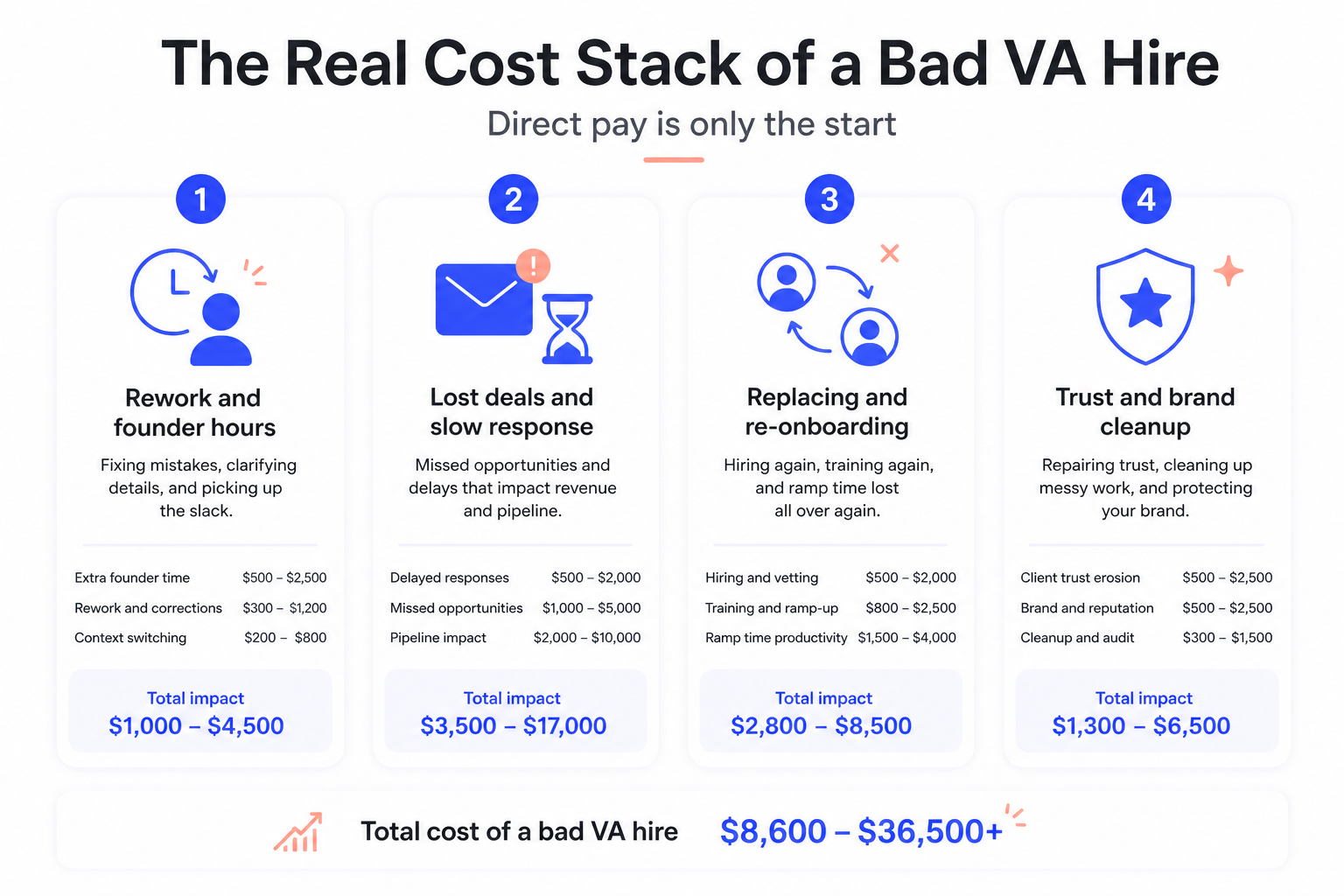 The real cost stack has four layers: rework, lost momentum, replacement, and trust cleanup. Direct pay is only the first line.
| Cost layer | What it looks like | Why it compounds |
|---|---|---|
| Rework and founder hours | Rewriting drafts, fixing CRM, redoing follow-ups | You pay for the VA and still do the job |
| Lost momentum | Slow replies, missed deadlines, stalled handoffs | Deals and ops wait while quality is rebuilt |
| Replacement and re-onboarding | Sourcing, testing, training, tool access again | You restart the learning curve mid-quarter |
| Trust and brand cleanup | Off-tone client messages or bad AI paste-sends | Recovery takes longer than the original task |
IBM notes that AI assistants still need oversight as systems get more capable (IBM). When a hire ships unreviewed AI output, the cleanup bill arrives fast.
How do hiring paths change bad-hire risk?
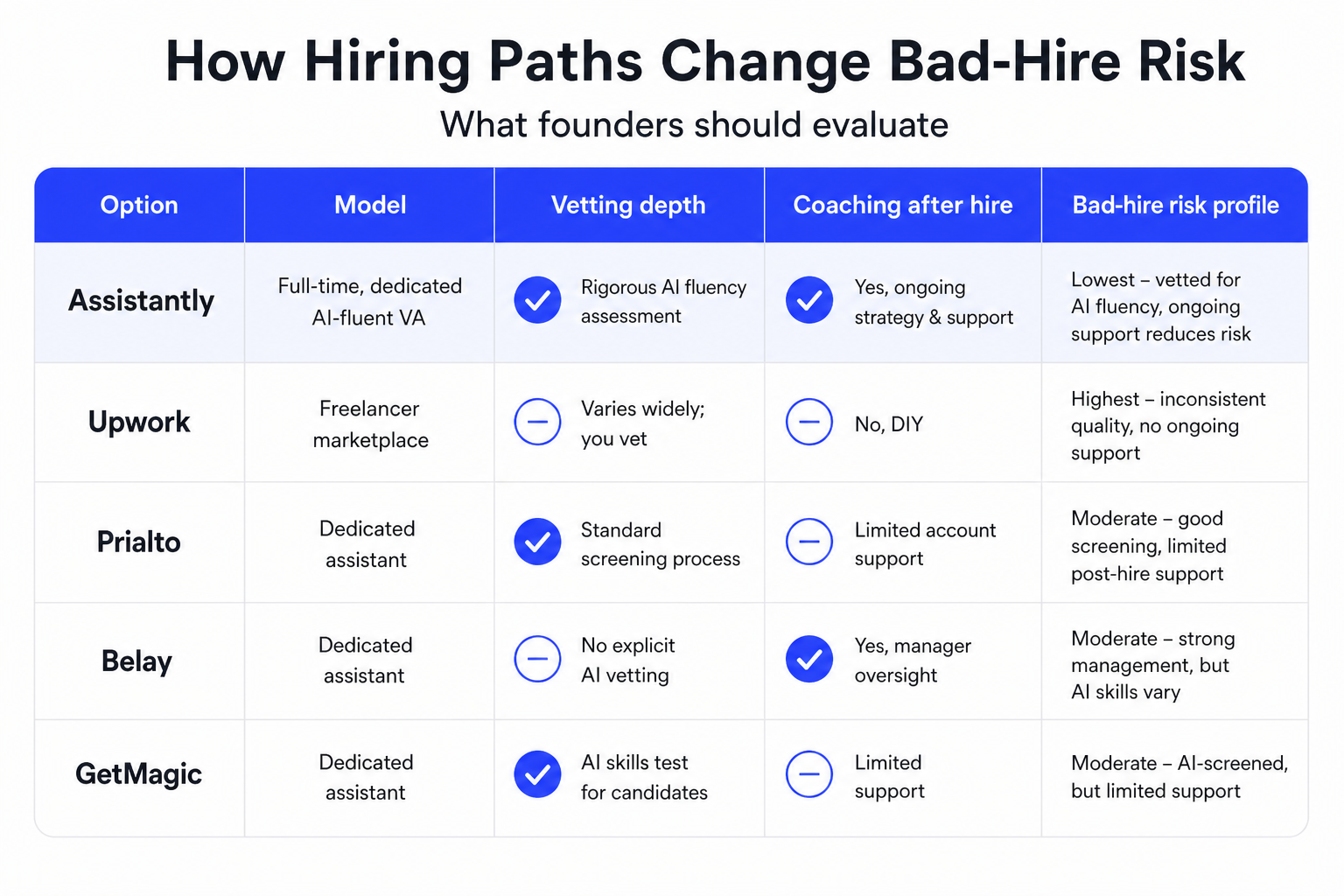
Hiring paths change bad-hire risk based on vetting depth and coaching after match day. DIY marketplaces can work if you own screening. Managed paths reduce founder QA load when coaching is real.
- Assistantly - Best for dedicated AI-trained Unicorn with Success Pod coaching ($2,800 to $3,000/mo).
- Upwork - Best for DIY hire when you will test and coach yourself (~$10 to $25+/hr).
- Prialto - Best for managed executive admin (~$1,500/mo fractional).
- Belay - Best for U.S.-based managed staffing (confirm AI workflow depth in sales).
- GetMagic - Best for flexible managed hours before full-time embed (~$270 to $540/wk).
| Option | Model | Vetting depth | Coaching after hire | Bad-hire risk profile |
|---|---|---|---|---|
| Assistantly | Dedicated Unicorn | Live AI workflow + judgment tests | Success Pod + Success managers | Lower when QA is coached weekly |
| Upwork | Freelance marketplace | You design and score tests | You manage | Higher if screening is rushed |
| Prialto | Managed dedicated | Varies by role | Engagement manager | Medium; confirm AI QA depth |
| Belay | Managed staffing | Confirm in sales | Client success support | Medium; confirm workflow tests |
| GetMagic | Managed hours | Confirm by plan | Managed support | Medium; confirm coaching depth |
Fair comparison sources:
How do you avoid paying for a bad VA hire twice?
Avoid paying twice by testing judgment before match day, documenting guardrails, and coaching quality after hire. Zapier's enterprise AI workflow reporting supports selective AI placement instead of forcing AI into every step (Zapier). The same rule applies to people: place AI where it helps, keep humans on the control layer.
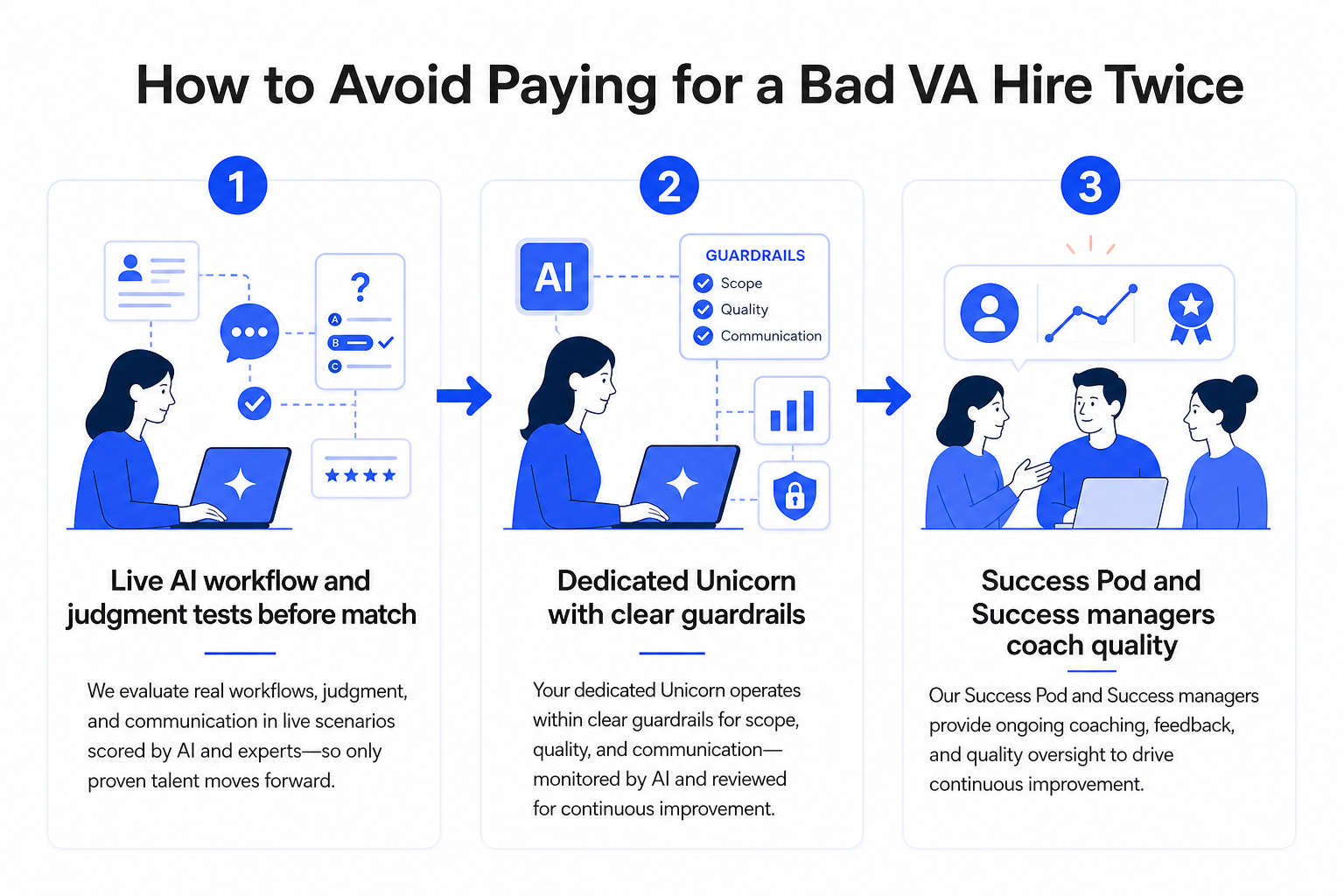 Prevention loop:
- Live AI workflow and judgment tests before match
- Dedicated Unicorn with clear send and escalation rules
- Success Pod and Success managers coach quality weekly
Hesitant and Precision delegators feel bad-hire costs fastest because quality risk stalls delegation. See Hesitant Delegators and Precision Delegators.
Why choose Assistantly when bad-hire cost is the fear?
Assistantly is built to reduce the expensive part of hiring: weak vetting and no coaching after week one. The Assistantly process includes live workflow testing, an AI interview, Leadership DNA matching, and a 90-Day Unicorn Success Plan. Tools are included. A Success Pod and Success managers keep QA paired with speed.
Related reading:
What warning signs mean the hire is already expensive?
Treat these as early cost signals, not personality quirks:
- You rewrite most AI drafts before send
- Escalations arrive late or not at all
- The same mistakes repeat after week two
- Tool access exists, but workflows are undocumented
- You avoid delegating high-stakes work after one miss
Frequently Asked Questions
What is the cost of a bad virtual assistant hire?
More than the monthly fee. Add rework hours, delayed ops, replacement time, and brand cleanup. Those layers often exceed the invoice.
Is a cheaper VA always higher risk?
Not always. Risk rises when vetting and QA coaching are missing, regardless of headline price.
How can I estimate the hidden cost quickly?
Track founder hours spent fixing VA work for two weeks, then multiply by your effective hourly rate. Add any delayed deals or re-hire time.
Does Assistantly reduce bad-hire risk?
Yes, through live AI workflow tests, dedicated Unicorn matching, included tools, and Success Pod coaching after hire.
Should I hire on Upwork to save money?
Only if you will design tests, score judgment, and coach QA yourself. Skipping those steps is how cheap hires become expensive.
What is the fastest way to prevent a bad AI-era hire?
Run a paid flawed-draft edit test, define human-only tasks, and require QA before any client-facing send.
When should I replace instead of coach?
Replace when core judgment errors repeat after clear feedback and documented guardrails. Coaching cannot fix missing ownership.
What's the bottom line?
The cost of a bad virtual assistant hire is a stack: pay, rework, delay, replacement, and trust cleanup. Direct pricing is the smallest line item when judgment fails.
If you want to lower that risk without building recruiting and QA yourself, Assistantly pairs dedicated AI-trained Unicorns with Success Pod and Success manager coaching. Review pricing and the process.
Related Articles


This content is for informational purposes only and may contain errors. Please contact us to verify important details.